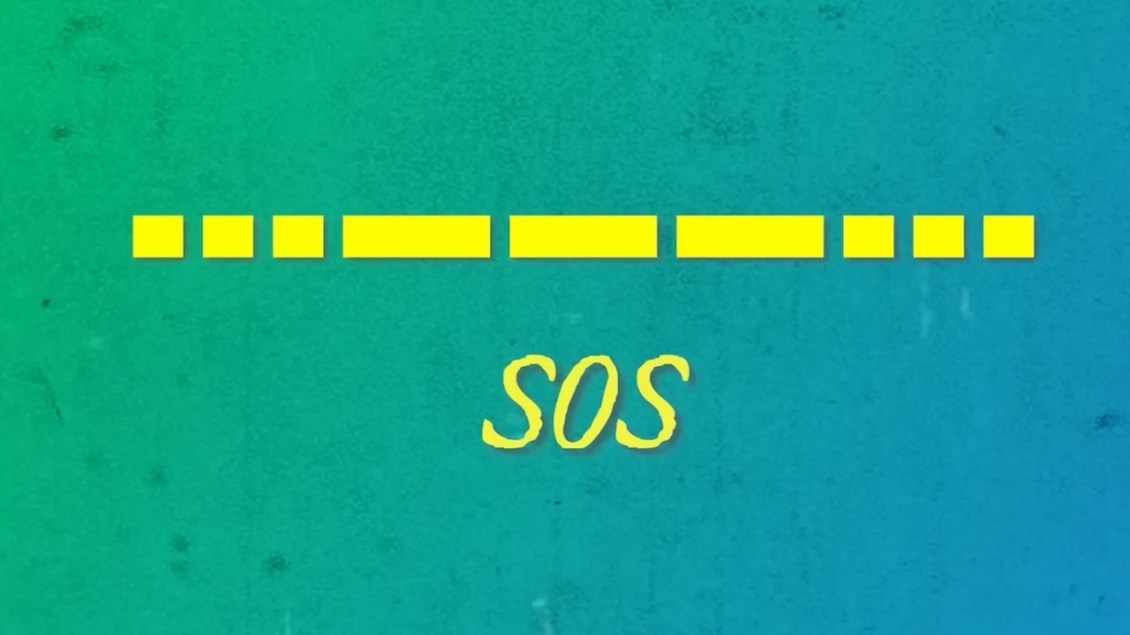
How SOS Became the Universal Distress Signal

Simon Whistler of Today I Found Out looked back at how SOS, which was originally communicated as three dots, three dashes and three dots, became the universal signal for distress. While there had previously been a number of distress calls for individual countries, SOS became the standard according to an vote taken at the International Radio Telegraph Convention in 1906.
The motion passed and on July the 1st, 1908, the convention issued a new set of service regulations, including article 16, which dictated that ships in distress shall use the following signal dot dot dot dash dot dot dot repeated at brief intervals. It seems necessary to specify that indications concerning a state of distress should be given by means of conventional signals in order that they may be understood by all stations.
One of the reasons why this pattern was chosen is its versatility.
Endlessly versatile, SOS can be tapped out on a telegraph key or spoken aloud over voice radio, flashed using a signal mirror or flashlight, written out in the snow or sand, or – if you happen to be held under duress – blinked out with your eyelids.