Washington DC BrainJams

by Scott Beale on January 27, 2006 · 4 comments

BrainJams

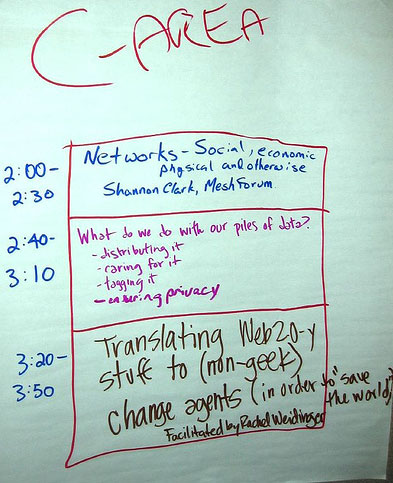
The next BrainJams event, BrainJams30Jan2006, takes place this coming Monday, January 30th at the DC Improv in Washington DC. The first two local BrainJams events were such a success that organizers Chris Heuer and Kristie Wells have decided to expand BrainJams beyond the Bay Area with their first East Coast event. More info can be found on the BrainJams wiki.

A BrainJams event is an unconference which combines knowledge networking and conversations in open spaces. We strive to bring people together from Non-profits, Technology, Business, the Arts and Government to share our insights and experiences to accelerate the pace of positive change and innovation in the world. The organizing principle of each event is separate from the format. While each BrainJams event can focus on different topics, the principal focus of our conversations at present is on how real people are using emerging social media tools (i.e. Web 2.0, citizen journalism, blogs, podcasts, social bookmarks, open collaboration, etc.).

BrainJams returns to the Bay Area next month with BrainJams25Feb2006 in Berkeley.

Laughing Squid is proud to be one of the sponsors of both the DC and Berkeley BrainJams events.

Here Are A Few Related Posts You Might Enjoy:

BrainJams New Orleans

BrainJams Berkeley

BrainJams

Irving Norman at the Katzen Arts Center in Washington DC

Diabetik Leaving Candy Corn Traffic Cones on The Streets of Washington DC

filed under Events

{ 2 comments… read them below or add one }

1 David Kaye January 28, 2006 at 1:18 pm

I guess I’m numbed by all the interest in Brainjams. One particular section really got my head spinning:

http://www.brainjams.org/mindmaps/BrainJams3Dec2005/afternoonsessions/Buildingacommunityoflike-mindedpeople.html

I’m like, huh? I’ve been a community organizer since I wsa in high school, and I just don’t see why people need to have sponsors to rent space for them so they can come together to discuss how to organize people. I’ve been doing it for years. All it takes is a purpose and a space. If the purpose is viable, the people will come.

One of my groups, SF Games, has been meeting once or twice a week for nearly 11 years. No special planning is required. There is no need for facilitators to make sure that a community is forming properly. Believe me, it is. It’s an excellent community made up of people with varying degrees of closeness to each other, depending on their desires to get close and their common interests and ways of looking at the world.

I’m just stunned by the self-congratulary bent of BrainJams, with people somehow believing they’ve built a better wheel that they’re now going to foist on society — with appropriate corporate funding, of course.

Reply

2 Chris Heuer January 29, 2006 at 6:51 am

David is right to a degree – you don’t need money to form community – I just checked out SF Games and it is a great example of a low-tech, low cost way to form community. It is an example I would readily promote to others as one example of how it can be done. He is to be congratulated for doing something great for 11 years – but that is because he is passionate about it, has invested his efforts over that time to make it happen and gets a source of income from the music promotion associated with it. If he did not organize SF Games, it might still exist – but without his leadership it would probably look quite different.

As he readily admits, he does not really understand what we are trying to do – actually we are still in the process of clarifying that for ourselves too – but the core story is simple, to bring together people from different backgrounds for sharing knowledge and ad-hoc collaboration. We have not yet invented a better wheel, though we are indeed trying to figure that out by engaging others like him and by experimenting. Just the other day in fact, I met one of the founders of the Homebrew Computer Club and discovered that much of what we are doing with BarCamps and BrainJams is pretty much the same sort of stuff they did within a slightly different structure.

But he is wrong to suggest that is about the money – that is why we are organizing as a non-profit instead of being an event company. If you went to any of the BarCamps, or our event, you would see that the facilitation is only around organizing and paying for logistics. The sort of logistics we are talking about could happen in a free, open public space and I hope they will as that is one of the real expenses of organizing a day long conference or unconference – but even the Hillside club costs money to secure for the day, and someone (me and several supporters in fact) has to invest the time in making the phone calls, doing the meetings and everything else (as well as promoting, getting the food etc… Maybe someday the non-profit will pay me an executive director salary, but for now I am investing what little funds I have to try to make something cool happen.

We could charge people a fee to attend the events, and some people are – which is ok with me really, that is just not what I want to do with it. As our history shows, we started these because many of the events we wanted to attend cost too much. So rather than charge people money, we seek sponsors and use those fees to offset costs of providing space, drinks, food and other event materials like poster boards etc…

He also points out something I never thought about though. The page he links to on the site is not my philosophy or the organizations principles. It is a set of notes that the group made during one of our events. I am actually glad to know that someone dug that deep and read it – but I had not thought people would perceive such materials as being ‘official organization’ communications, so we will need to think about how to address it.

The bottom line though is that what we are doing is not going to be for everyone, and that is ok. The cool thing is that I love this sort of non-inflamatory criticism and questioning because it will help up figure things out faster and help us get further along. We don’t want to be the facilitators of events over the long term, I am just doing it for now for the same reasons he does what he does – I have a passion for it, and I love the people I get to hang out with as a result of those efforts. Our goal is to empower others to do similar unconferences, to inspire more people to believe they can do it themselves and to organize insights, experiences and resources for those people to benefit from. To this end, it would be great to see more insights from David in regards to how he started SF Games and how he keeps it growing. I am sure we could learn a thing or two that would help us and many others do it better.

Reply

Leave a Comment

You can use these HTML tags and attributes: <a href="" title=""> <abbr title=""> <acronym title=""> <b> <blockquote cite=""> <cite> <code> <del datetime=""> <em> <i> <q cite=""> <strike> <strong>

Moderation: All comments are manually approved, so if your comment is approved it may take a while for your comment to appear on this blog post.

Irrelevant, obnoxious, trolling, abusive and spam comments will not be approved. Let's keep things civil and on topic. Basically what we are saying, if your comment does not add to the conversation, it will not be approved.

Real Name & Website: For the most part do not post anonymous comments. Please list your real name and provide a link to your website, blog, Twitter account, etc. You know who we are, so we ask the same of you.

Corrections: If you want to point out a typo or correction, please email us instead. Typo or correction comments will not be approved since they are pretty much useless once they are corrected and then only tend to confuse things.

Gravatars: If you would like a Gravatar to show up with your comment? Just sign-up for an account and any comment with your email address will display your Gravatar.

Previous post: Berkeley Bloggers Dinner Photos

Next post: Reconsidered Materials