How Flavor Is Informed by More Than Just Taste

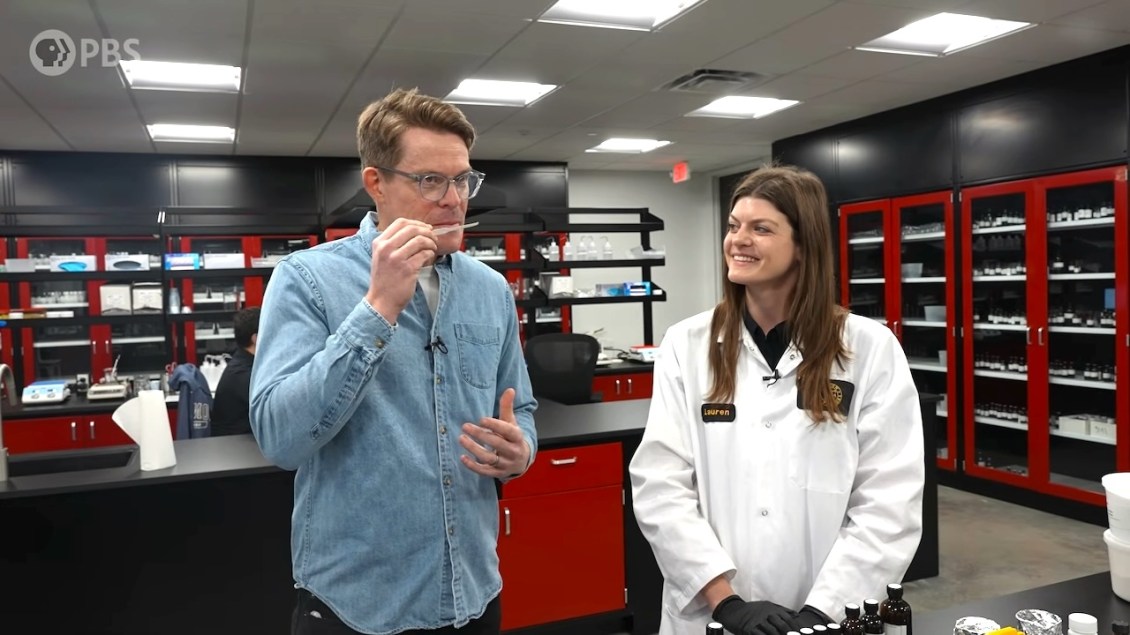
In a tasteful episode of the PBS series Be Smart, host Dr. Joe Hanson visited senior certified flavorist Lauren Muhlberger at Sovereign Flavors in Austin, Texas, where he learned that flavor is not just informed by taste but also by smell, sound, sight, and memory. These are then processed in the brain to create an entirely subjective experience.
What does flavor really mean? And how does it work? In this episode, Joe visits a flavor chemistry lab to meet a master flavorist and uncover how taste, smell, sound, sight, and memory combine in the brain. Along the way, he learns how flavors are built molecule by molecule—and why identical foods can taste completely different to different people.
Hanson also talked about how culture influences flavor perception.
Studies of cultural impact on flavor perception are fascinating. In one example, American study participants experience heightened almond olfaction when holding a sugar solution in their mouth while Japanese participants experience heightened almond olfaction when holding an umami MSG solution in their mouth. Researchers think it’s because we have different cultural associations about whether something like almond should be sweet or savory.