San Francisco’s New Contemporary Jewish Museum


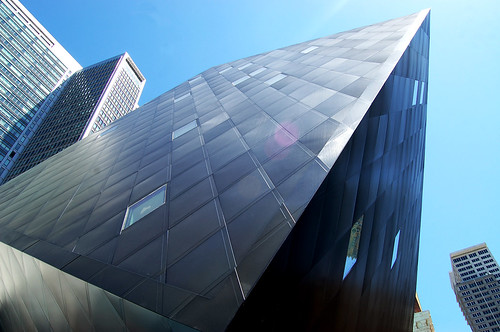
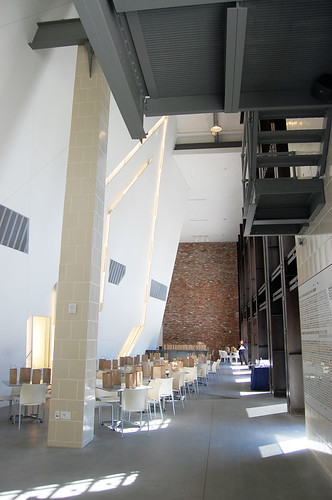
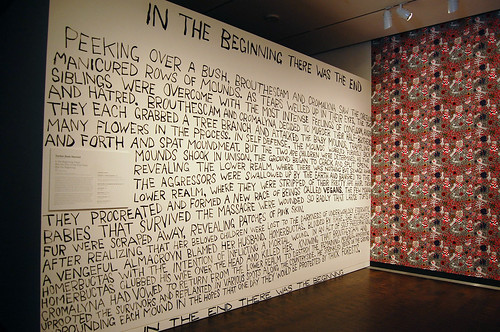

San Francisco’s new Contemporary Jewish Museum opens to the public on Sunday, June 8, but yesterday I managed to weasel my way into a preview tour of the building. Created inside the shell of a (gorgeous) former PG&E power substation that was designed by architect Willis Polk in 1907, the new museum was reinvented by the reknowned modern architect Daniel Libeskind. The facade of the original PG&E building remains largely intact, with the obvious exception of a giant “blue steel” cube — Libeskind said that, not me — added to the western side of the structure.

Libeskind was also the architect for a famously somber Jewish Museum in Berlin, but he explained that the message conveyed by this project is very different. In Germany, he said, the Jewish museum is inevitably linked with memories of the Holocaust, but San Francisco’s CJM “celebrates Jews and Jewish life, in the spirit of the West Coast.”
That’s about right. The CJM includes several multimedia performance spaces, and it won’t have a permanent collection. The exhibits on display at the grand opening will include a sound project by John Zorn and installations by seven contemporary artists who reinterpreted the story of Genesis. I spent about an hour wandering through the grounds and spaces, and enjoyed it thoroughly, so check the link for more photos. There’s also an opening party scheduled for Saturday night, called DAWN 2008, with $15 tickets available at the door.
photo gallery: Touring the Contemporary Jewish Museum
photos by Todd Lappin (Telstar Logistics)